
Control Valve Characteristics and Sizing Guide
A control valve is a mechanical device used to regulate the flow of fluids such as gases, liquids, slurries, or granular materials within a system. It adjusts the flow rate, pressure, temperature, or level in response to signals from a controller, typically a process control system. This ensures that a process operates within the desired parameters, maintaining stability, efficiency, and safety.
Control valves are widely used across industries such as chemical processing, oil and gas, power generation, food and beverage, pharmaceuticals, and water treatment, where precise fluid flow regulation is essential.
Key Functions of Control Valves:
- Flow Control: Regulating fluid flow to maintain the desired rate.
- Pressure Control: Maintaining constant pressure in pipelines or tanks.
- Temperature Control: Adjusting fluid flow to control heat transfer in heating or cooling processes.
- Level Control: Managing liquid levels in vessels or tanks to prevent overflow or underfilling.
- Emergency Shutoff: Closing the valve to isolate a section of the process in case of emergency.
Components of Control Valves:
- Valve Body: Houses the valve trim and channels the fluid flow.
- Actuator: Adjusts the valve’s position based on the control signal.
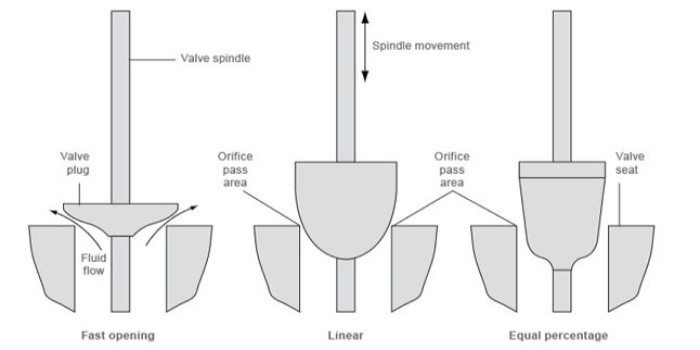
- Trim: Internal parts like the valve plug, seat, and stem that directly influence flow.
- Positioner: Ensures the valve’s position corresponds accurately to the input signal from the controller.
Bonnet: Seals the valve assembly and houses the stem and packing to prevent leakage.
Download link:
